A delayed close is just a backlog of unanswered questions.
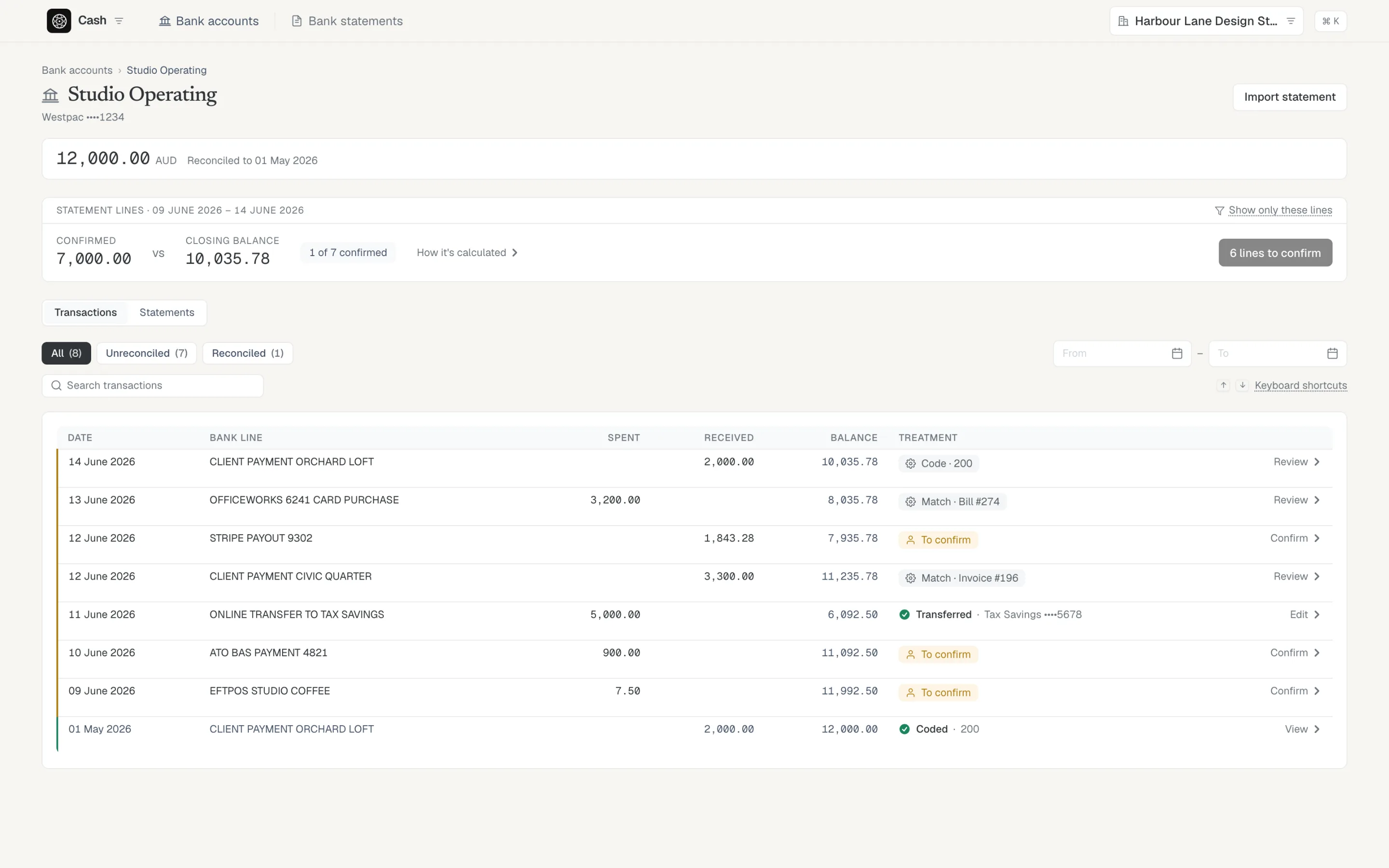
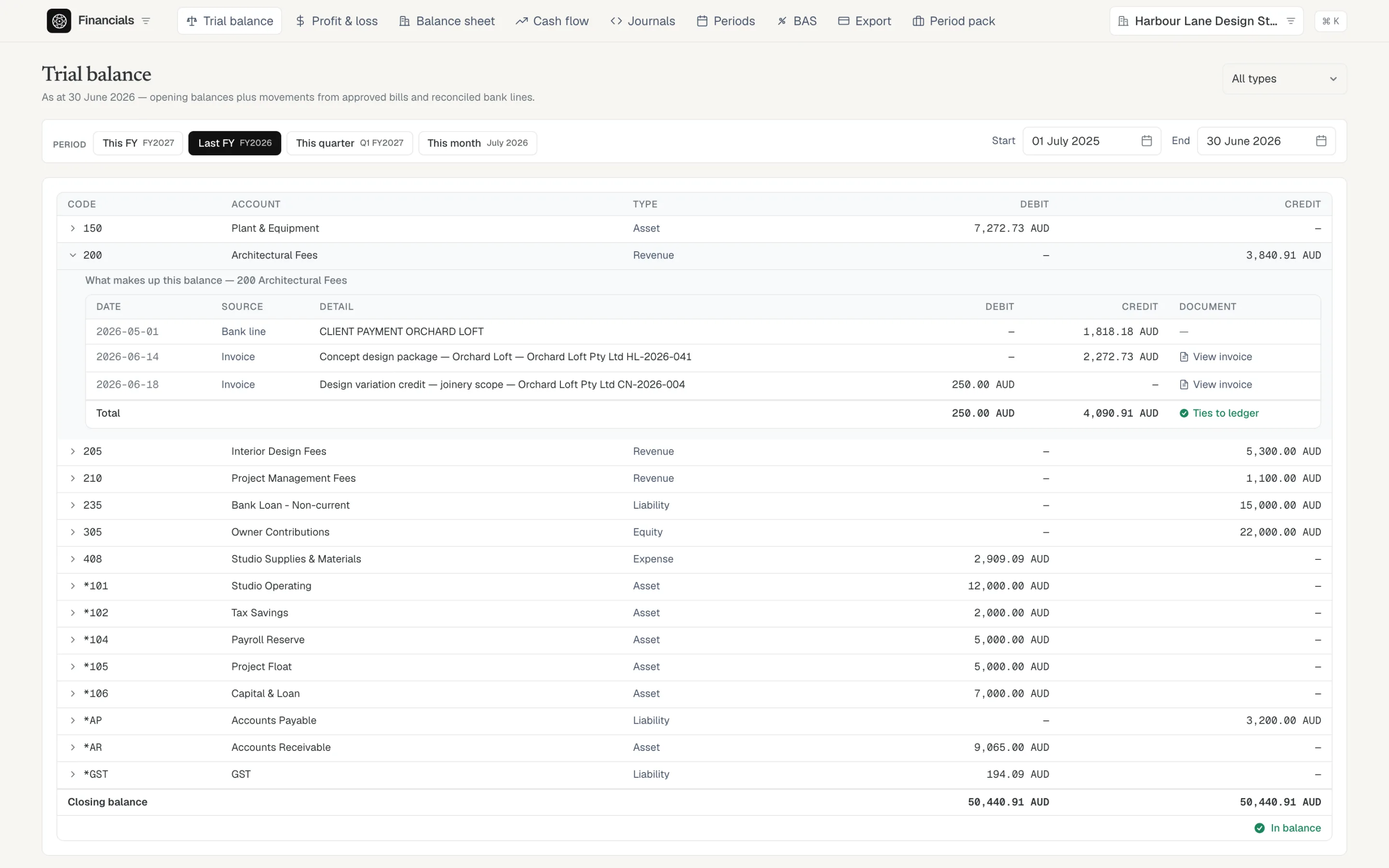
A messy month-end is simply a pileup of missing paperwork. Acclines captures the proof the day the work clears, building a calm, substantiated ledger that serves the owner, the bookkeeper, and the accountant equally.
AI prepares · you approve
Bills in. Invoices out. Nothing re-typed.
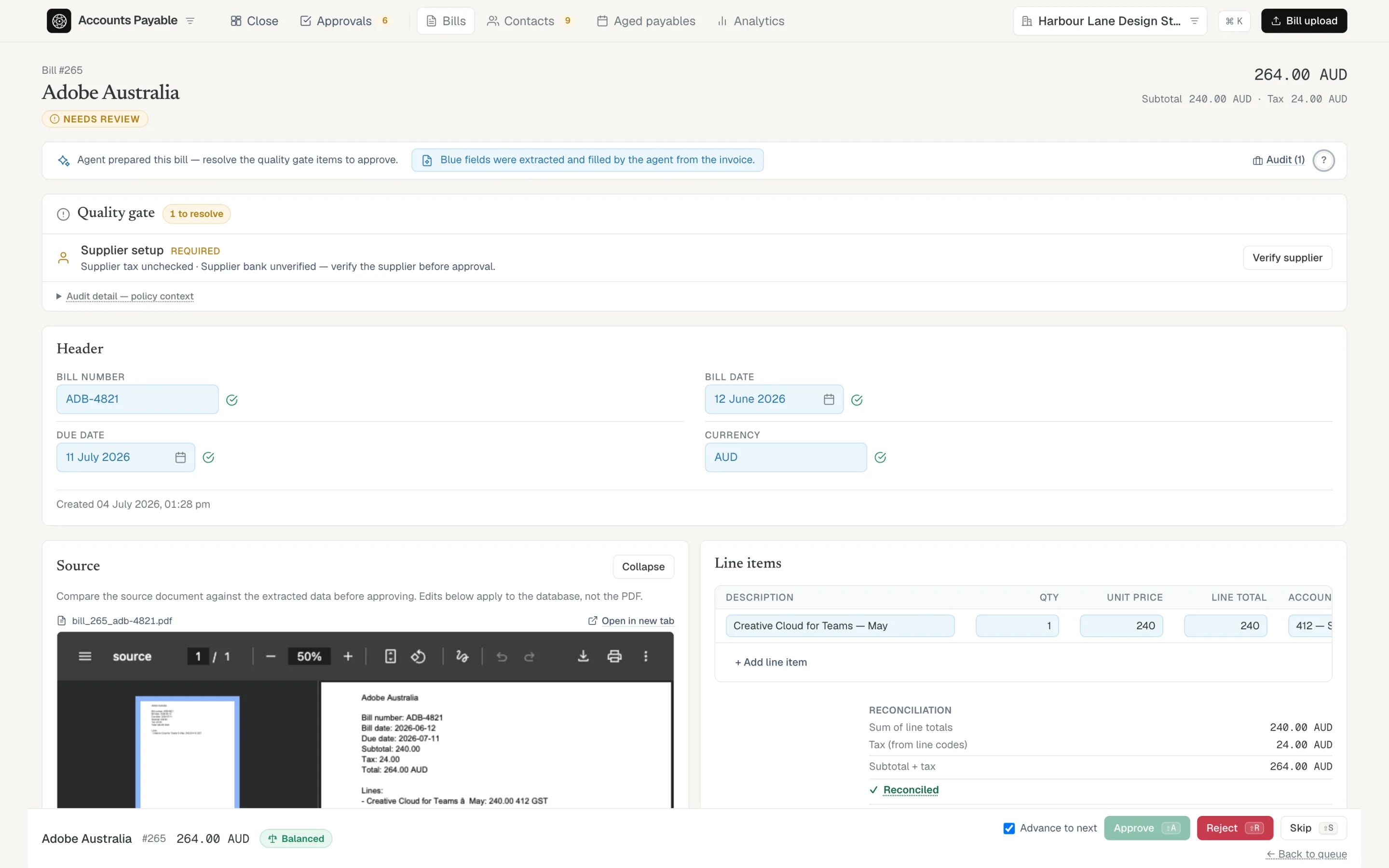
The AI reads each bill and codes it, in blue until you approve. Duplicates, mismatched totals, a changed supplier — each blocks approval. No “approve anyway.”
What's done, what's left, and the evidence behind each.
June 2026
Close checklist
4 need attention
Reconcile 1 bank account
Bank & credit cards
1 open
Approve 3 bills still in review
Accounts payable
3 open
Tie out 1 balance
Balance sheet
1 open
Post 2 draft journals
Journals
2 open
Every bill has its source file
Accounts payable
done
1 supplier statement reconciled
Accounts payable
done
GST evidence ready for BAS
Tax · AU
done
Evidence coverage9 of 11 supported
Where it works
Australia · BAS & GST reconciliationSingapore · GST F5 evidenceHong Kong · profits-tax schedulesMulti-entity · each with its own books
Before you decide
The questions we hear most.
Does the AI ever record anything on its own?+
No. Everything it prepares is shown in blue until you check or approve it, and nothing counts in your books until you approve it. Approve something by mistake? Undo is real — reversals are recorded, never erased.
Does my accountant need to use Acclines too?+
No. At handover they get clean CSV exports of the journals and trial balance, plus the Export Pack — the period’s source documents, reconciliations, and schedules in one ZIP. They keep working in the systems they already trust, and nothing about your books is locked in.
Can it handle foreign currencies?+
Yes. Each entity keeps its books in one base currency and can switch on the foreign currencies it deals in. A bill, invoice, or bank account in one of them books at a documented rate that freezes when you approve it, and month-end restates whatever is still open. Hong Kong businesses get HKMA daily rates automatically; elsewhere you enter the published rate yourself, and every rate shows where it came from.
Can I bring my existing chart of accounts?+
Yes. Bring it as a spreadsheet — Acclines reads it, maps the columns, and marks anything it wasn’t sure about in blue for you to confirm. Or start fresh: a ready-made starter chart and GST tax codes are one click away, and nothing is ever loaded without you choosing it.
What does “early access” actually mean?+
A small group of businesses and practices running Acclines on their real books, with a direct line to the people building it. Request access, tell us a little about how you keep your books today, and we’ll be in touch.
A month-end that stays calm.
Keep the work under control as it happens, and arrive at the close already prepared.