Trial balance, P&L, balance sheet, cash flow, BAS, journals — all derived from the entries you approved, all in balance, and every number one click from the document behind it. Then close the month and lock it.
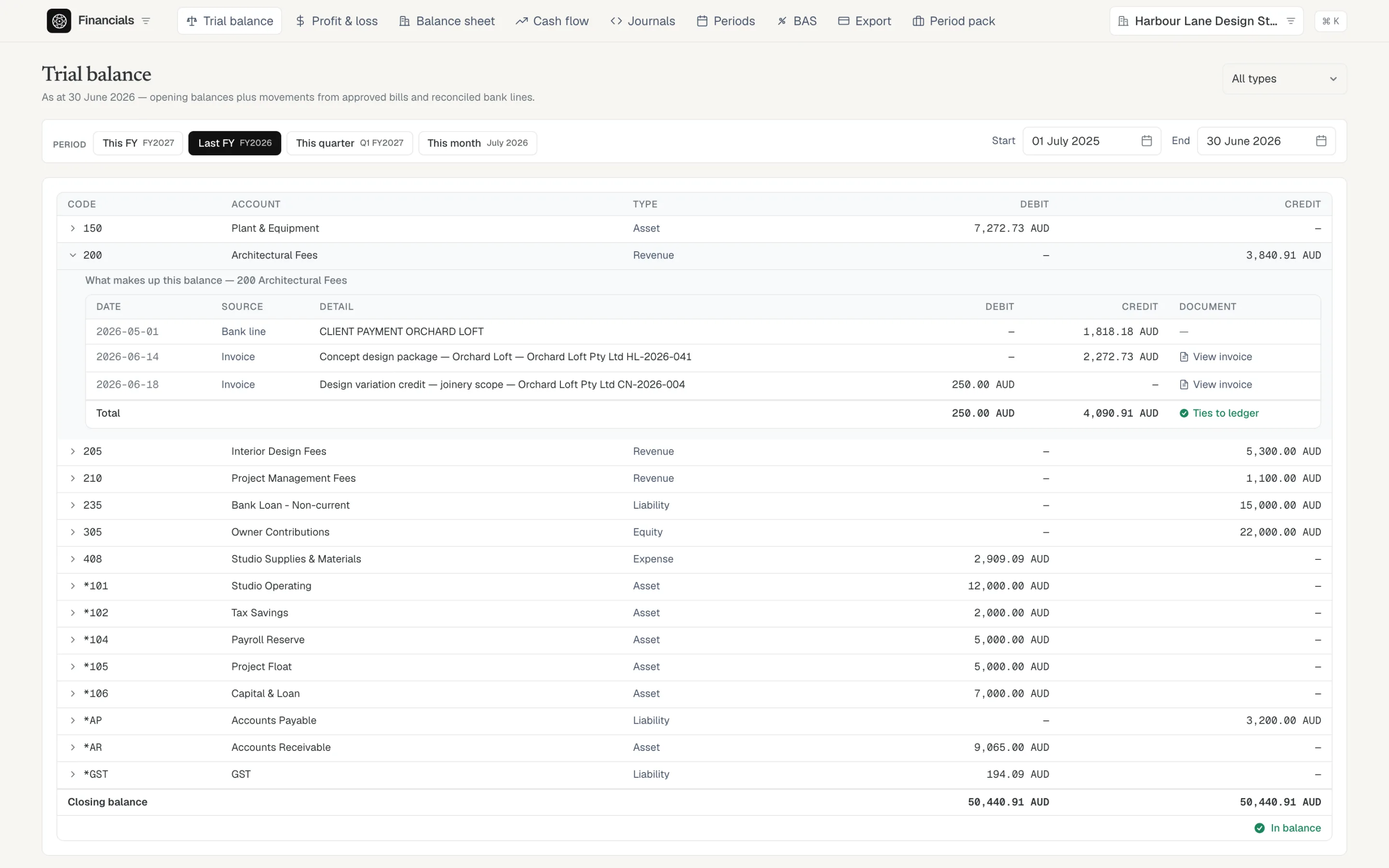
Expand any balance to the postings behind it — then open the invoice the AI read. The page proves it ties.
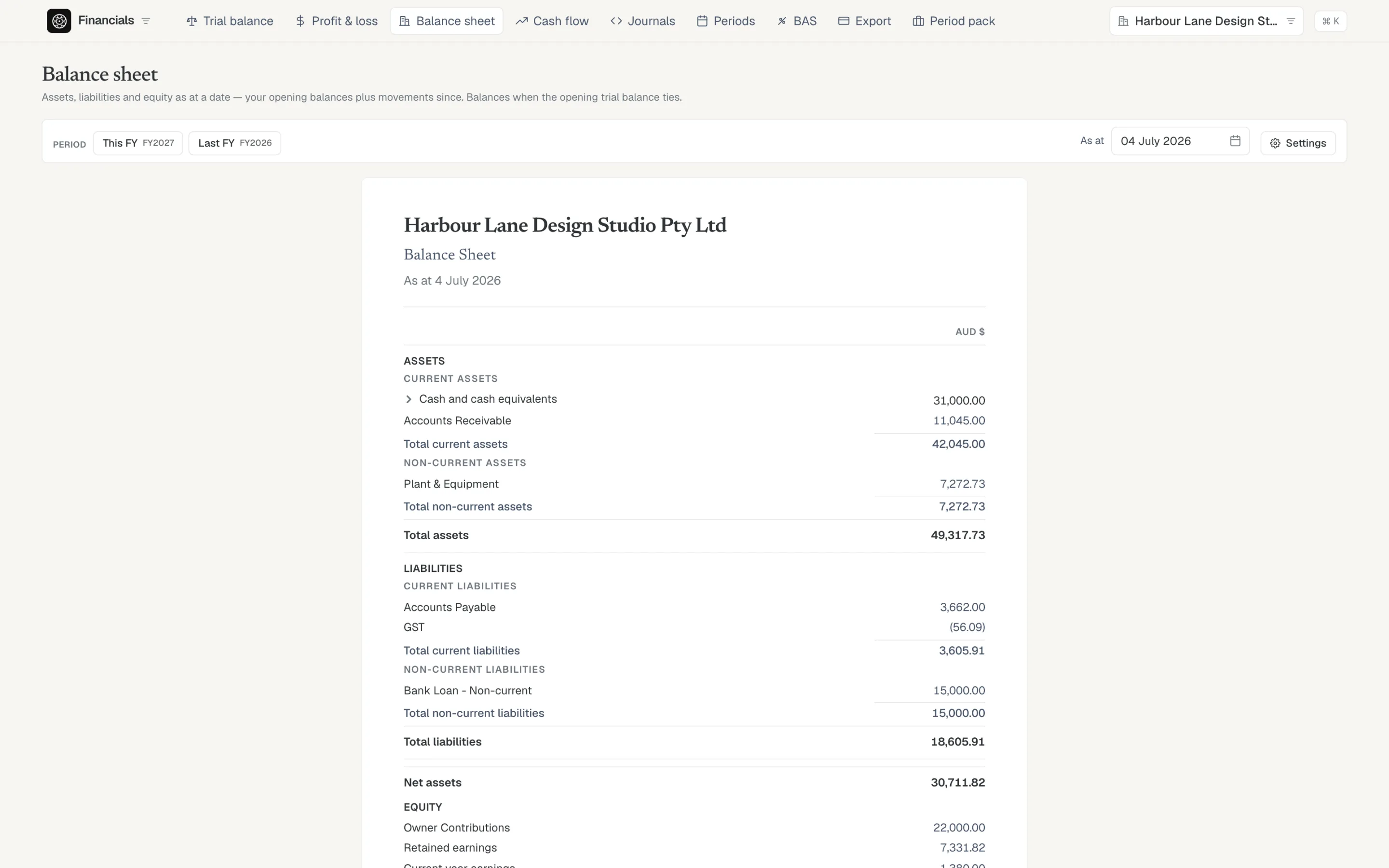
The balance sheet is your opening balances plus movements from approved documents and reconciled bank lines — it balances because the ledger balances. The P&L reads from the same source, so there is no drift between what you approved and what you report.
Period presets speak your financial year: This FY, Last FY, this quarter, this month.

Tag lines with up to two tracking dimensions — location and department, or whatever pair fits your business — and the P&L pivots into columns per option. Same ledger, same totals, a sharper question answered.
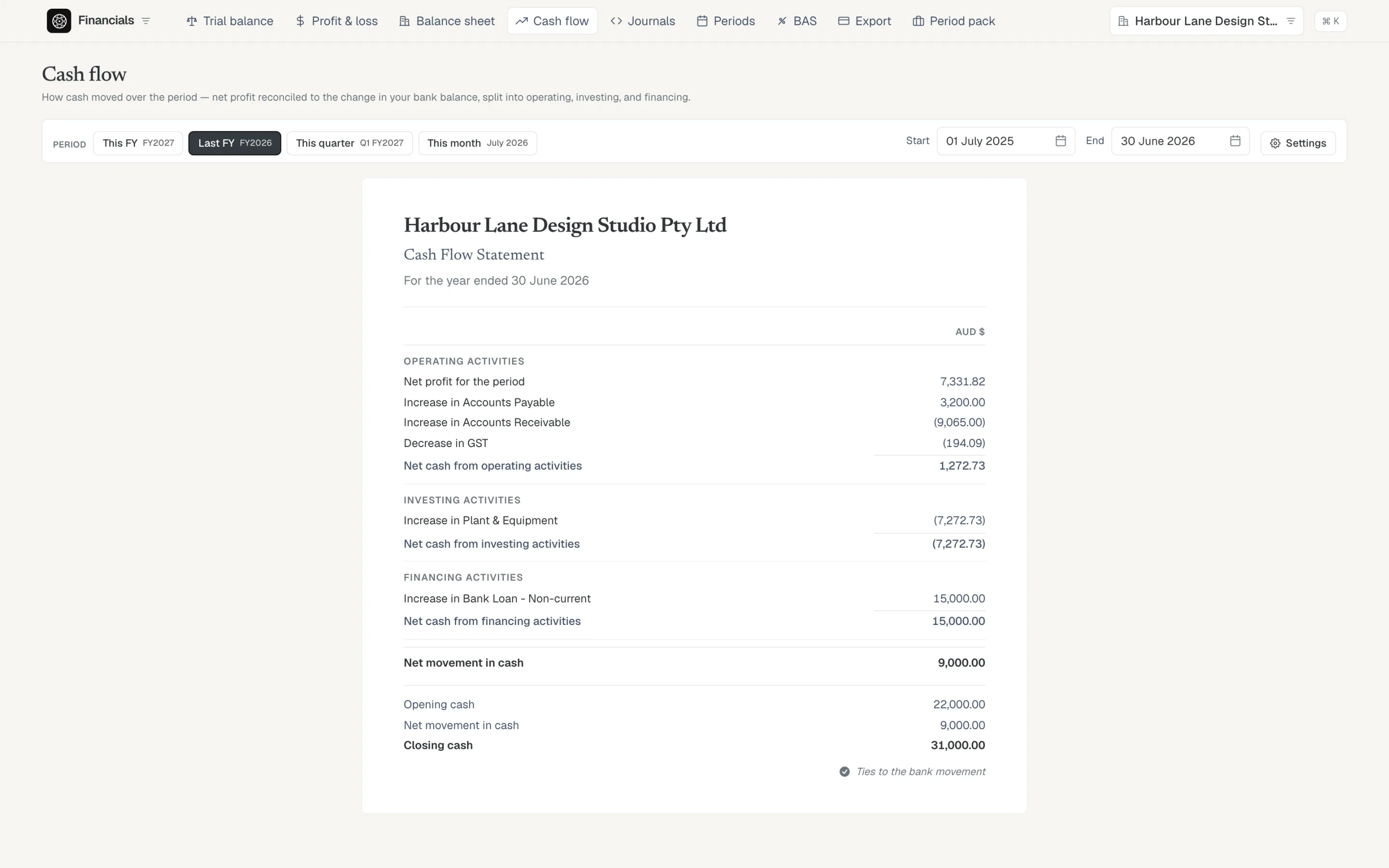
Net profit reconciled to the change in your bank balance, split into operating, investing, and financing. Because cash comes from reconciled bank lines, the statement ties to the actual bank movement — and says so.

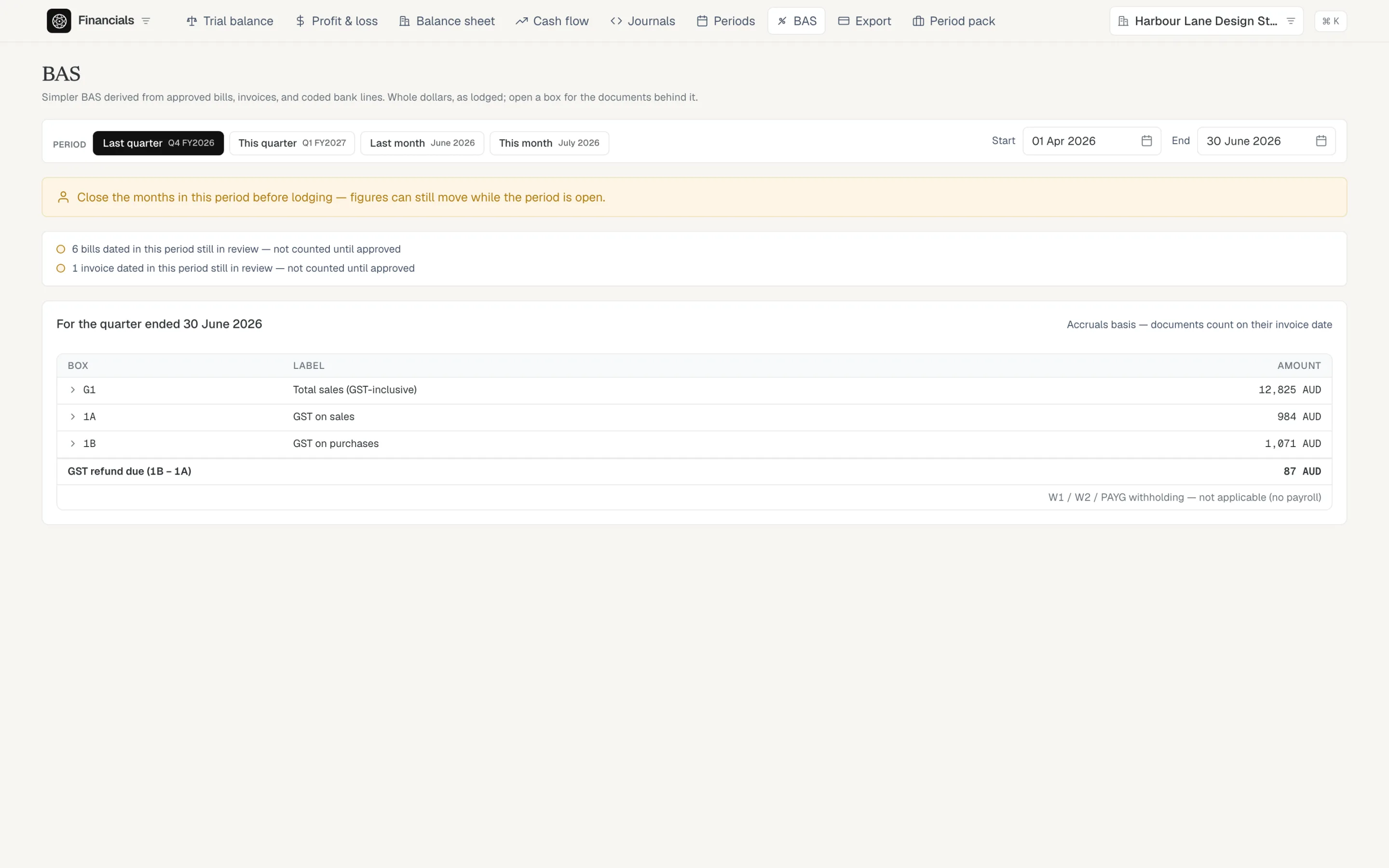
Simpler BAS is derived from approved bills, invoices, and coded bank lines — whole dollars, as lodged, on an accruals basis. Open any box to see the documents inside it, and the page tells you when bills still in review would move the figures.
It nudges you to close the months first, so what you lodge can’t change underneath you.

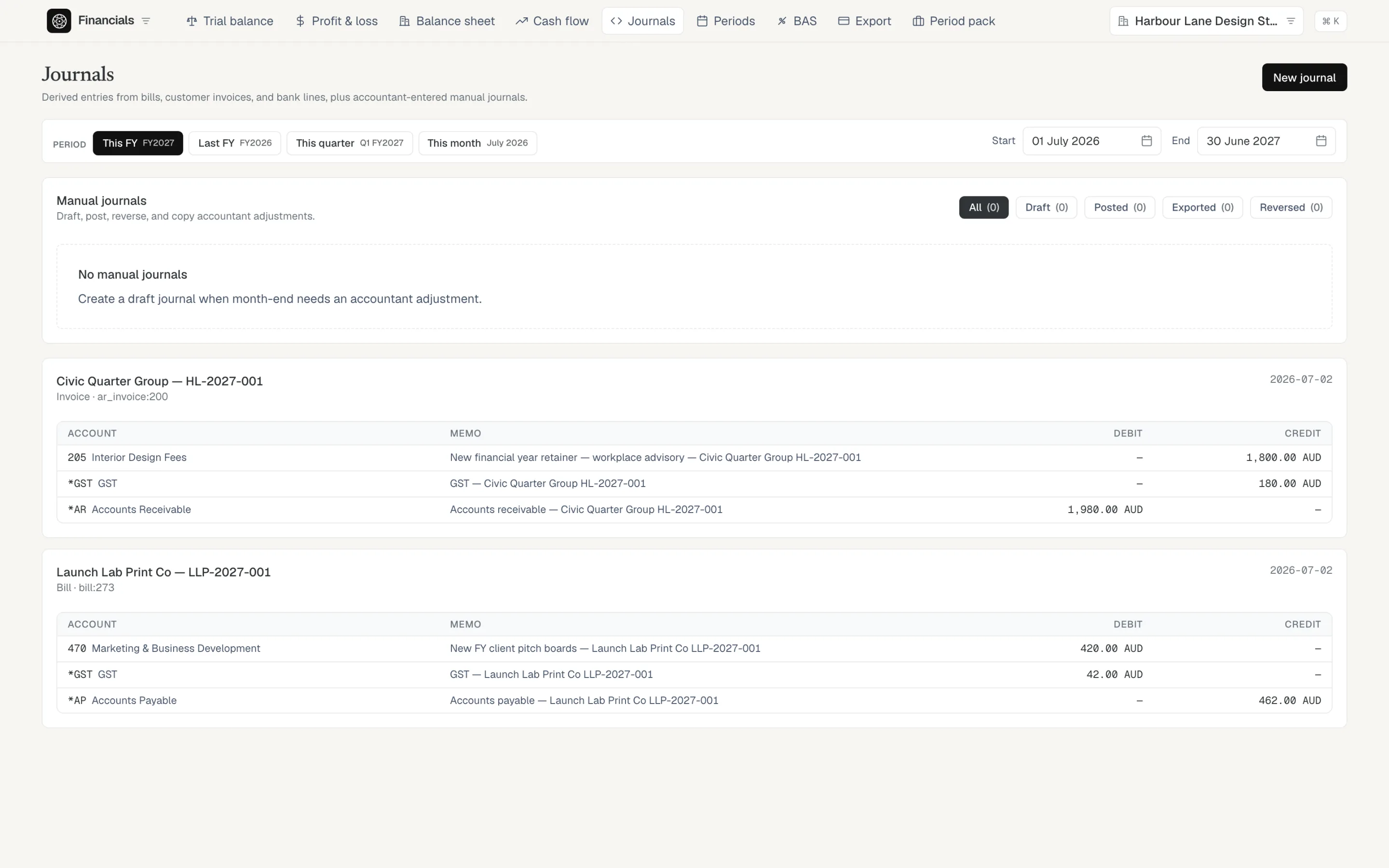
Journals are derived from your documents — each one names its source bill, invoice, or bank line, and debits equal credits by construction. When month-end needs an accountant adjustment, manual journals sit beside them: drafted, posted, reversed, or copied, never silent.

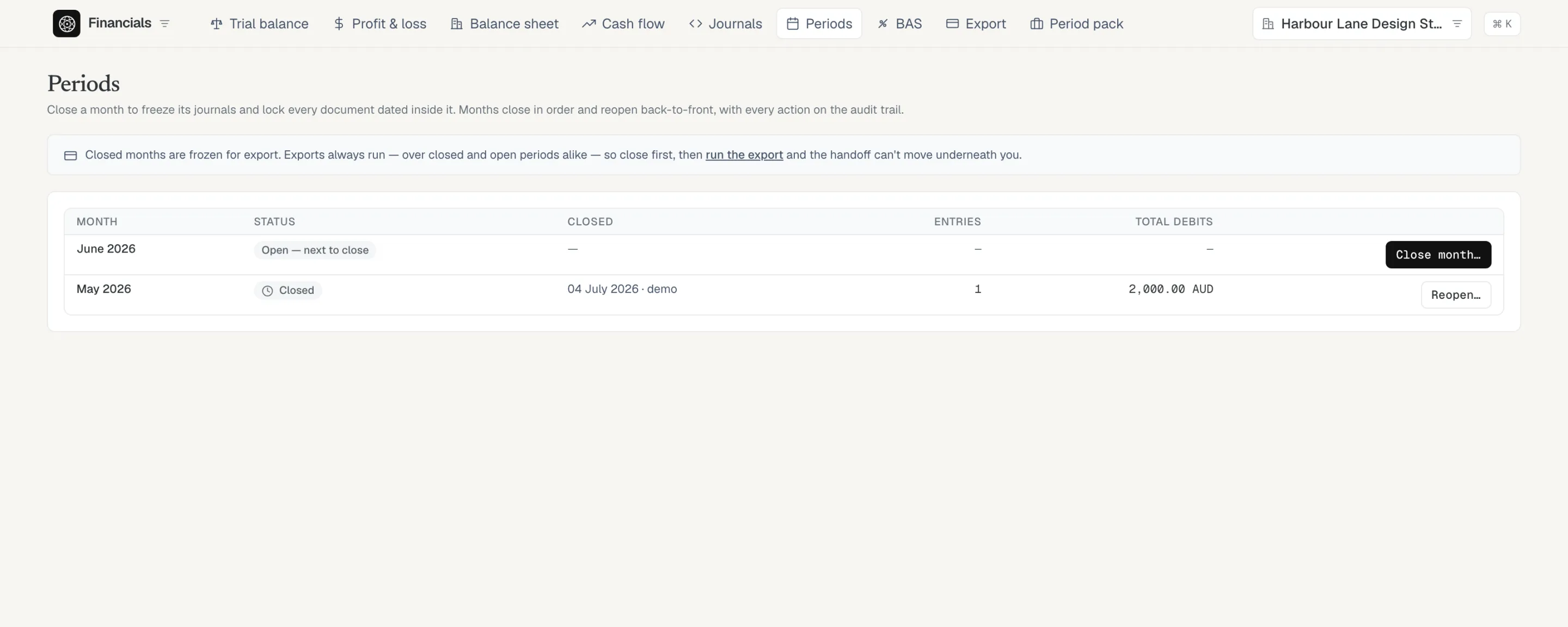
Closing a month freezes its journals into stored rows and locks every document dated inside it. Months close in order and reopen back-to-front, with a typed reason, on the audit trail. At year end, earnings roll into retained earnings on the balance sheet — no ceremony required.

May is closed and frozen; June is next. A number you’ve reported can’t move underneath you.
When your accountant or an external system needs the books, the export is one action — and it’s evidence-backed.
Clean CSV exports of the journals and trial balance for any period, ready for the systems accountants already use.
A ZIP of the source documents behind the period, linked to the entries they support. The audit folder was building itself all along.
A download-only bundle of the period’s statements — trial balance, P&L, balance sheet — as they stood when you closed.
Each legal entity keeps its own chart, banks, and books under one login. A new entity starts empty, and reports never cross-count.
AI-drafted bills and invoices, approved through one quality gate.
Explore bills & invoices →Every confirmed bank line posts straight to this ledger.
Explore bank →Drill-to-document, manual journals, and a close that holds.
For accountants →We are opening AccLines to a small group of teams who want AI speed without giving up control of the ledger.
Request early access